BPC-157
You’re now subscribed to price tracking for this product. We’ll notify you if the price drops.
Fast Delivery
Quick, reliable shipping to any location.
Free & easy returns
Return this item by mail or in store within 90 days for a full refund.
About BPC-157
What Is BPC-157?
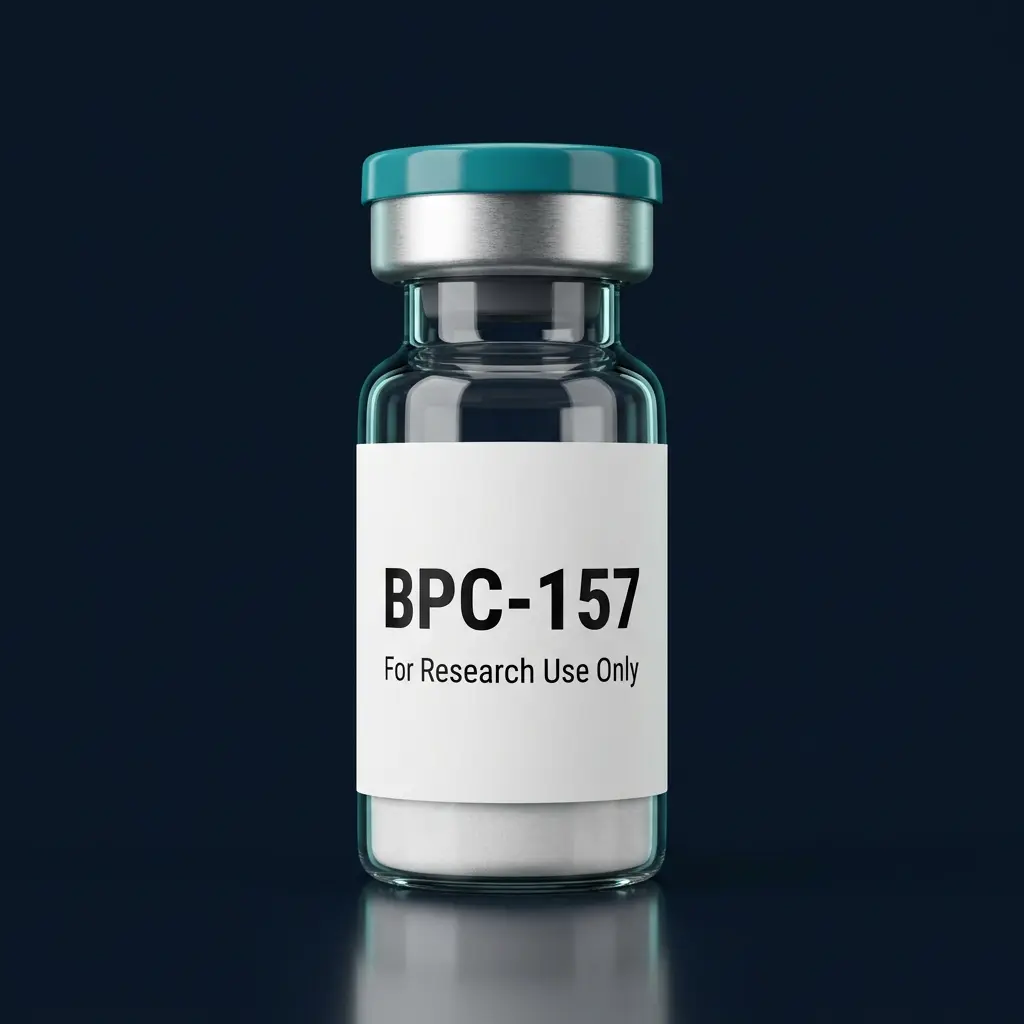
BPC-157 (“Body Protection Compound 157”) is a synthetic pentadecapeptide — a 15-amino-acid sequence originally isolated as a fragment of a protein found in gastric juice. It is supplied by CertaPeptides as a pharmaceutical-grade lyophilized powder for in vitro and preclinical research use.
CAS: 137525-51-0. Sequence: Gly-Glu-Pro-Pro-Pro-Gly-Lys-Pro-Ala-Asp-Asp-Ala-Gly-Leu-Val.
What Published Research Has Reported
The statements below are direct attributions to peer-reviewed preclinical studies. They describe observations in animal models or in vitro systems only and should not be interpreted as human clinical claims.
- Sikiric et al. (2014) reviewed the role of the nitric oxide system in rodent BPC-157 studies and reported interactions between the pentadecapeptide and NO-pathway modulators in gastrointestinal and vascular experimental models. Source: Current Pharmaceutical Design, 20(7), 1126–1135. PMID 23755725.
- Chang et al. (2014) reported that, in cultured rat Achilles tendon fibroblasts, BPC-157 exposure was associated with increased growth hormone receptor expression compared to control. Source: Molecules, 19(11), 19066–19077. PMID 25415472.
- Krivic et al. (2008) observed, in a rat Achilles tendon-to-bone transection model, differences in early functional recovery measurements between BPC-157-treated animals and controls. Source: Inflammation Research, 57(5), 205–210. PMID 18594781.
- Staresinic et al. (2006) reported outcome measurements after application of BPC-157 in a rat transected-quadriceps model. Source: Journal of Orthopaedic Research, 24(5), 1109–1117. PMID 16609979.
Research Areas Where BPC-157 Is Studied
- Preclinical models of musculoskeletal tissue response (rodent tendon, ligament, muscle)
- In vitro fibroblast and endothelial cell culture assays
- Experimental gastrointestinal mucosa models in rats and mice
- Nitric-oxide pathway signalling studies in animal tissue
Within the Tissue-Repair Cluster — How BPC-157 Differs
BPC-157 is studied alongside two other research peptides in overlapping tissue-repair contexts: TB-500 (a 17-amino-acid fragment of thymosin β-4) and the combined BPC-157 + TB-500 blend. These compounds come from different biological origins and modulate different molecular pathways, which is why researchers often use them in combination rather than as substitutes:
| Feature | BPC-157 | TB-500 |
|---|---|---|
| Biological origin | Fragment of a protein found in gastric juice (BPRP) | Active fragment (aa 17–23) of thymosin β-4, found in most mammalian cells |
| Amino acid length | 15 (pentadecapeptide) | 17 (heptadecapeptide) |
| Molecular weight | 1419.53 Da | 4963.5 Da |
| Primary mechanism studied | Nitric-oxide pathway, VEGFR2/angiogenesis, mucosal protection | Actin sequestration, cell migration, cytoskeletal dynamics |
| Best-characterised preclinical models | Rodent GI mucosa; Achilles/quadriceps transection; vascular NO assays | Cardiac epicardial progenitor; corneal inflammation; wound migration |
| Oral-route research context | Studied in oral delivery; shows gastric stability | Primarily injectable research; limited oral data |
BPC-157’s distinguishing research angle is its gastric origin and mucosal-protection phenotype: it is the only compound in this cluster with published preclinical evidence in GI mucosa models, and the only one routinely studied under oral administration. For researchers investigating combined actin-cytoskeletal + nitric-oxide pathways in the same protocol, the BPC-157 + TB-500 blend presents a fixed 1:1 formulation; for independent dose control or single-pathway studies, the individual products are preferred. Researchers comparing the two frequently reference the TB-500 vs BPC-157 comparison, the blend-vs-individual decision guide, and the ultimate guide to BPC-157 research.
Specifications
| CAS Number | 137525-51-0 |
| Sequence | Gly-Glu-Pro-Pro-Pro-Gly-Lys-Pro-Ala-Asp-Asp-Ala-Gly-Leu-Val |
| Molecular Formula | C62H98N16O22 |
| Molecular Weight | 1419.53 g/mol |
| Purity | ≥98% (supplier batch spec; 99.4% avg across independently tested lots) |
| Physical Form | Lyophilized (freeze-dried) powder |
| Salt form | Acetate (standard BPC-157, not arginate/PDA) |
| Available Sizes | 2mg, 5mg, 10mg, 20mg |
Storage
Lyophilized: −20°C for long-term storage (2+ years stable). 2–8°C for short-term use.
Reconstituted: 2–8°C, use within 4 weeks. Do not freeze after reconstitution.
Quality Assurance
- Shipped to a ≥98% supplier batch specification
- Selected lots are independently tested by Janoshik Analytical (HPLC + mass spectrometry; 99.4% average purity across published reports)
- Independent reports searchable by batch code at certapeptides.com/verify
- EU-based quality control under CERTALAB S.R.L.
Important Notice — Research Use Only
BPC-157 is supplied by CertaPeptides strictly as a laboratory research compound. The findings cited above are taken from preclinical, animal-model, and in vitro studies and are reported here for research context only. They are not medical claims. BPC-157 is not a drug, not a dietary supplement, not a cosmetic, and not approved by the FDA, EMA, or any other regulatory authority for use in humans or animals. It is not intended to diagnose, treat, cure, prevent, or mitigate any disease or condition. For laboratory research purposes only. Not for human consumption.

Reviews
There are no reviews yet.