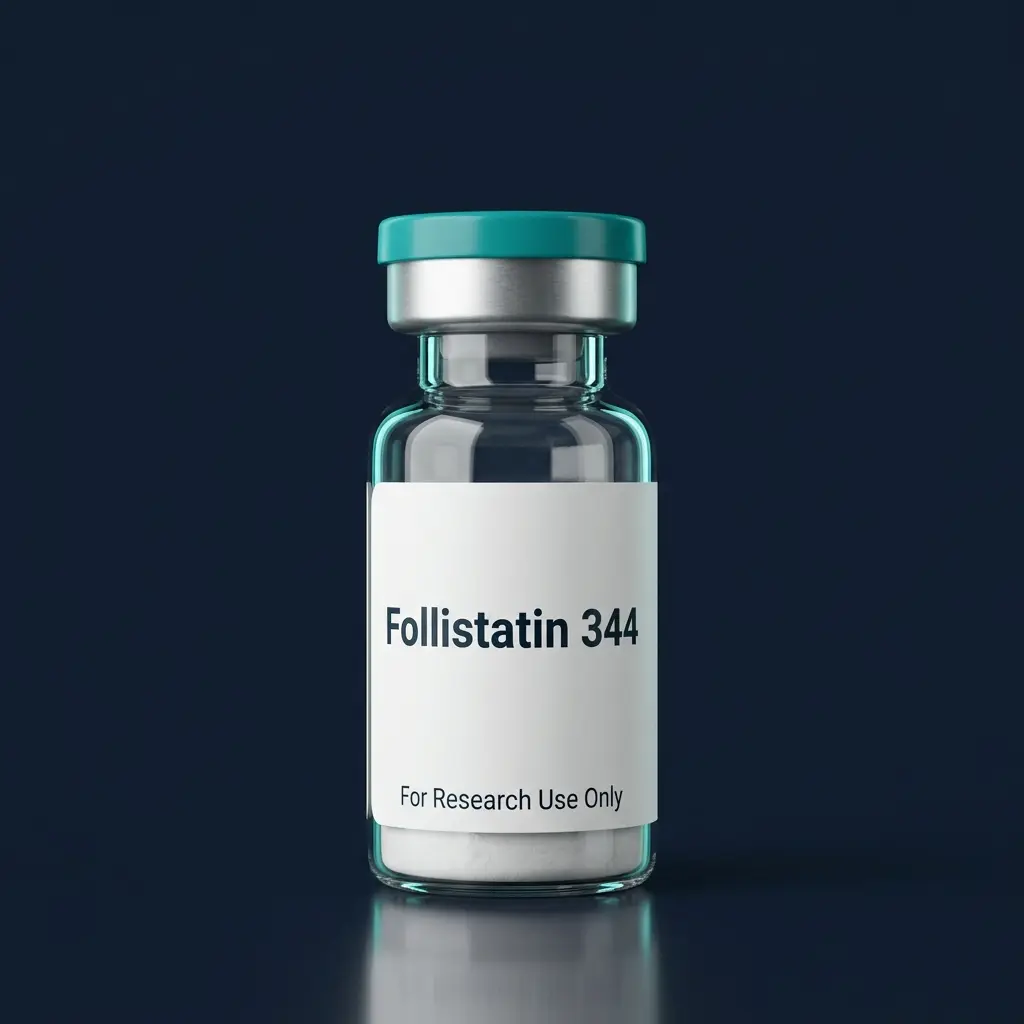
Follistatin 344 1mg
You’re now subscribed to price tracking for this product. We’ll notify you if the price drops.
Fast Delivery
Quick, reliable shipping to any location.
Free & easy returns
Return this item by mail or in store within 90 days for a full refund.
About Follistatin 344 1mg
Follistatin 344 is the predominant isoform of follistatin expressed in most non-gonadal tissues. Follistatin is an activin-binding protein that was originally identified as an FSH-suppressing factor but has much broader biology — it binds and neutralizes several TGF-beta superfamily members including activin A, BMP-2, BMP-4, BMP-7, and, critically for muscle research, myostatin. By neutralizing myostatin (GDF-8), follistatin is studied as a pro-hypertrophic factor in skeletal muscle research models. Each vial contains 1mg.
Myostatin is the primary negative regulator of myogenesis-pathway activity in mammals. Myostatin loss-of-function is associated with increased muscle mass across animal models such as mice, cattle, and dogs in published research. Follistatin’s ability to neutralize myostatin has made it one of the most studied pro-muscular factors in research contexts. Importantly, follistatin works upstream of the receptor — it sequesters myostatin before it can bind ActRIIB — which is a different mechanism from ActRIIB antagonists that block the receptor directly.
Follistatin-344 vs Follistatin-288: the difference is in the C-terminal tail. FS288 (the heparan sulfate-binding form) stays localized to tissues; FS344 circulates more freely and has longer systemic activity. In research targeting circulating myostatin, the full-length FS344 variant is commonly studied. For local tissue studies, FS288 may be more appropriate.
Specifications
| Parameter | Value |
|---|---|
| Compound | Follistatin 344 (FS344 isoform) |
| Amount per Vial | 1mg |
| Purity | ≥98% (supplier batch specification); selected lots independently tested by Janoshik (HPLC + mass spectrometry), searchable at certapeptides.com/verify |
| Format | Lyophilized powder |
| Reconstitution | Sterile PBS or 0.1% BSA in PBS |
| Storage | -20°C; 2-8°C after reconstitution |
Storage
Store at -20°C before reconstitution. Follistatin is a glycoprotein — reconstitute with sterile PBS or BSA-containing buffer to prevent adsorption to tube surfaces. Refrigerate after reconstitution and use within 7-14 days.
How does follistatin promote myogenesis-pathway activity by neutralizing myostatin?
Myostatin (GDF-8) is a TGF-beta family member that suppresses muscle satellite cell proliferation and muscle protein synthesis — it is the primary brake on myogenesis-pathway activity in mammals. Follistatin binds myostatin with high affinity and neutralizes it before it can activate its receptor (ActRIIB). This effectively removes the inhibitory signal, allowing satellite cell proliferation and muscle hypertrophy to proceed without the myostatin constraint. The dramatic muscle development seen in myostatin knockout animals represents the upper limit of this effect.
What is the difference between follistatin-344 and follistatin-288?
The two isoforms differ in their C-terminal tails. Follistatin-288 has a tail that binds heparan sulfate proteoglycans in the extracellular matrix, anchoring it to local tissue. Follistatin-344 has a longer tail that reduces heparan sulfate binding and allows it to circulate more freely. In research targeting circulating myostatin, the FS344 variant is commonly studied. For studies of local effects in specific tissues, FS288’s tissue localization may be more appropriate. Most research literature and muscle-focused studies use FS344.
Besides myostatin, what else does follistatin bind?
Follistatin binds multiple TGF-beta superfamily members: activin A and B (the original discovery context, relevant to FSH regulation and reproductive biology), BMP-2, BMP-4, BMP-7, and BMP-11 (GDF-11). This broad binding profile means follistatin administration affects multiple signaling pathways beyond just myostatin. For research where myostatin inhibition specifically is the goal, this promiscuity should be accounted for in interpretation. Compounds that specifically block ActRIIB or target myostatin directly (like anti-myostatin antibodies) have narrower activity if target specificity is critical.
Follistatin 344 is supplied for laboratory research use only. Not approved for human use. Handle in compliance with institutional biosafety guidelines.

Reviews
There are no reviews yet.