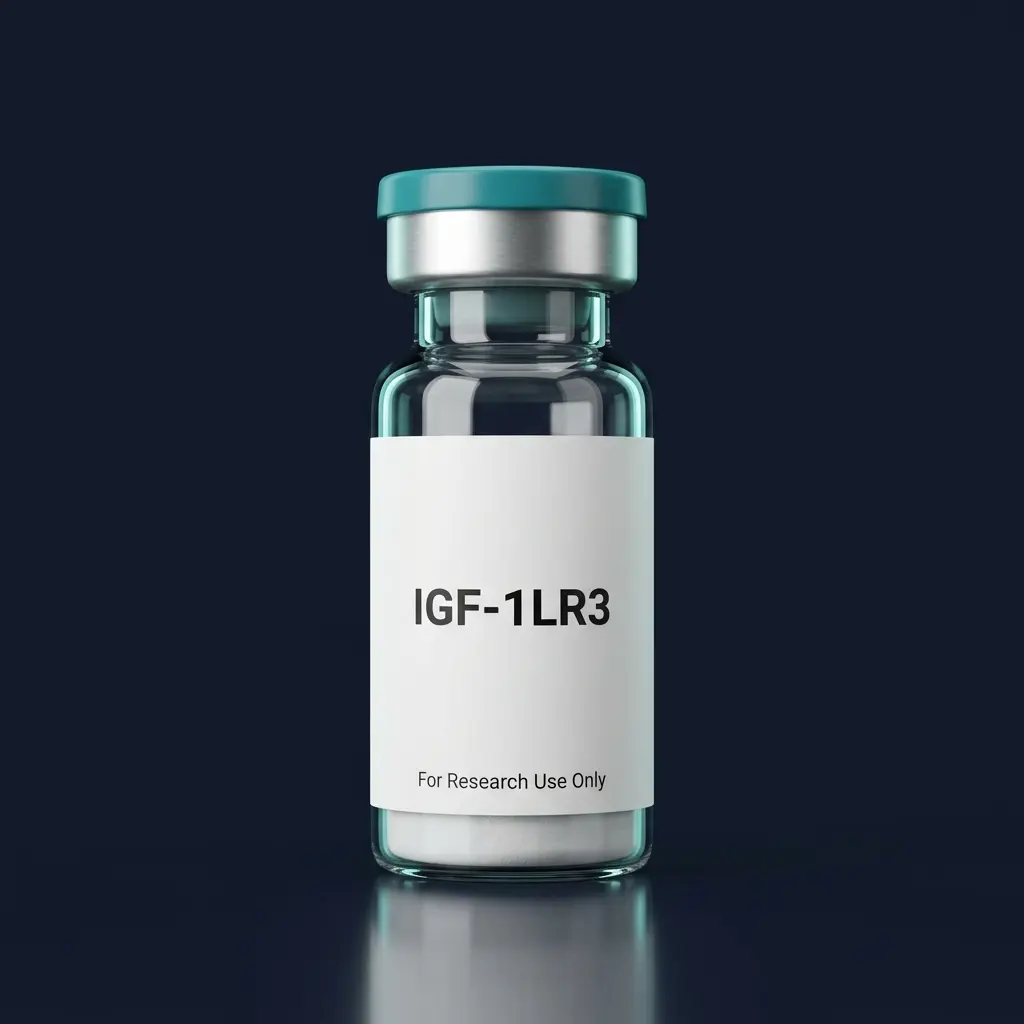
IGF-1LR3
You’re now subscribed to price tracking for this product. We’ll notify you if the price drops.
Fast Delivery
Quick, reliable shipping to any location.
Free & easy returns
Return this item by mail or in store within 90 days for a full refund.
About IGF-1LR3
IGF-1 LR3 (Long R3 IGF-1) is a recombinant analogue of insulin-like growth factor 1 engineered for extended half-life. The modifications consist of two changes from native IGF-1: a 13-amino acid N-terminal extension and an arginine substitution at position 3. Together these modifications reduce binding to IGF binding proteins (IGFBPs), which in the native system sequester IGF-1 and limit its bioavailability. The result is approximately 10-15 times longer half-life than native IGF-1 and substantially higher bioavailability due to reduced IGFBP binding.
IGF-1 is the primary mediator of growth hormone’s anabolic effects. After GH stimulates hepatic IGF-1 production, circulating IGF-1 binds IGF-1 receptors in muscle, bone, and other tissues. In research models, IGF-1 receptor signalling is studied for its role in protein synthesis, cell proliferation, and differentiation. IGF-1 receptor signaling activates PI3K/Akt and MAPK pathways — core regulators of cell growth and survival. In skeletal muscle specifically, IGF-1 signaling is studied in research models for its role in muscle protein synthesis, satellite cell activation, and hypertrophy. IGF-1 LR3’s extended activity makes it useful for studying IGF-1 receptor biology over longer time windows than native IGF-1 allows.
One caveat worth noting for research design: the reduced IGFBP binding means IGF-1 LR3 behaves differently from endogenous IGF-1 in systems where binding proteins play a physiological role. Studies examining IGFBP-IGF interactions or physiological IGF-1 signaling should account for this difference.
Specifications
| Parameter | Value |
|---|---|
| Compound | IGF-1 LR3 (Long Arg3 IGF-1) |
| Purity | ≥98% (supplier batch spec; 99.4% avg across independently tested lots) |
| Format | Lyophilized powder |
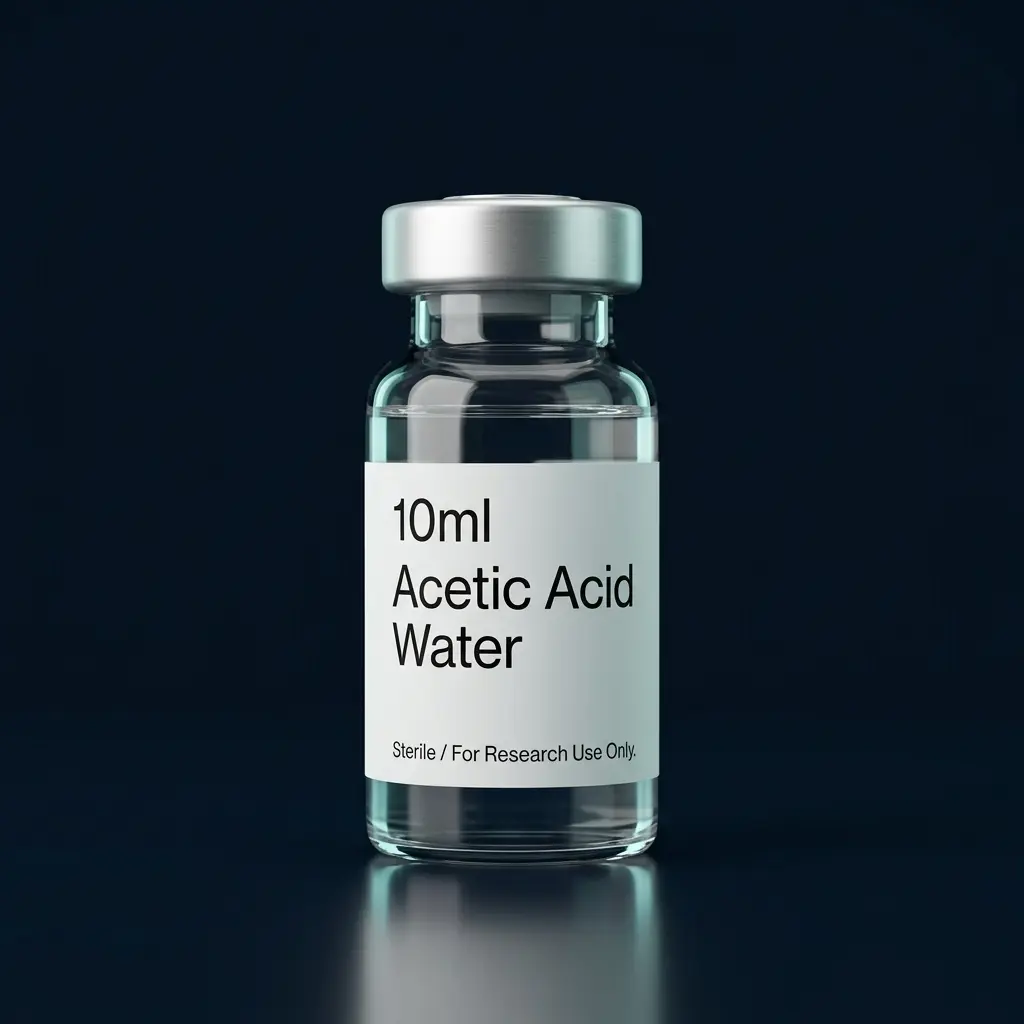
| Reconstitution | 0.1% acetic acid or bacteriostatic water |
| Storage | -20°C; 2-8°C after reconstitution |
Storage
Store at -20°C before reconstitution. Reconstitute with 0.1% acetic acid initially, then dilute with PBS or cell culture medium. Refrigerate reconstituted solutions at 2-8°C and use within 7-14 days. Avoid repeated freeze-thaw cycles.
What does “LR3” mean and how does it differ from native IGF-1?
LR3 stands for “Long R3” — the L refers to a 13-amino acid N-terminal extension, and R3 refers to an arginine substitution at position 3 (replacing glutamate). Together, these changes reduce the affinity of IGF-1 LR3 for IGF binding proteins by approximately 1,000-fold compared to native IGF-1. Since IGFBPs sequester native IGF-1 and limit its bioavailability, this modification dramatically increases free IGF-1 concentration at receptors. The extended N-terminus also slows proteolytic clearance. Combined effect: approximately 10-15x longer half-life and much greater biological potency per mg administered.
What are the key differences between IGF-1 and HGH for muscle research?
HGH primarily works indirectly on muscle by stimulating hepatic IGF-1 production (endocrine signaling). IGF-1 also acts through autocrine/paracrine mechanisms locally in muscle tissue, where it’s produced in response to loading. IGF-1 LR3 bypasses the GH-liver-IGF-1 axis and delivers IGF-1 receptor stimulation directly. This is useful for studies that want to examine IGF-1 receptor signaling independently of GH, or for studies where the GH-liver step would be a confounding variable. IGF-1 LR3 is also studied in research models for its direct role in satellite cell activation, complementing GH’s role in the growth axis.
What research contexts require IGF-1 LR3 rather than native IGF-1?
IGF-1 LR3 is preferred when extended IGF-1 receptor stimulation is needed — for chronic experiments, for systemic administration where rapid clearance of native IGF-1 would limit exposure, or for cell culture studies where the extended half-life provides more consistent receptor activation over the experiment duration. Native IGF-1 is preferred when studying the physiological IGFBP regulatory system or when IGFBP interactions are part of the research question, since LR3’s reduced IGFBP binding removes a layer of regulation that may be important for certain studies.
IGF-1 LR3 is supplied for laboratory research use only. Not approved for human use. Handle in compliance with institutional biosafety guidelines.

Reviews
There are no reviews yet.