Insulin Syringes 10-Pack
You’re now subscribed to price tracking for this product. We’ll notify you if the price drops.
Fast Delivery
Quick, reliable shipping to any location.
Free & easy returns
Return this item by mail or in store within 90 days for a full refund.
About Insulin Syringes 10-Pack
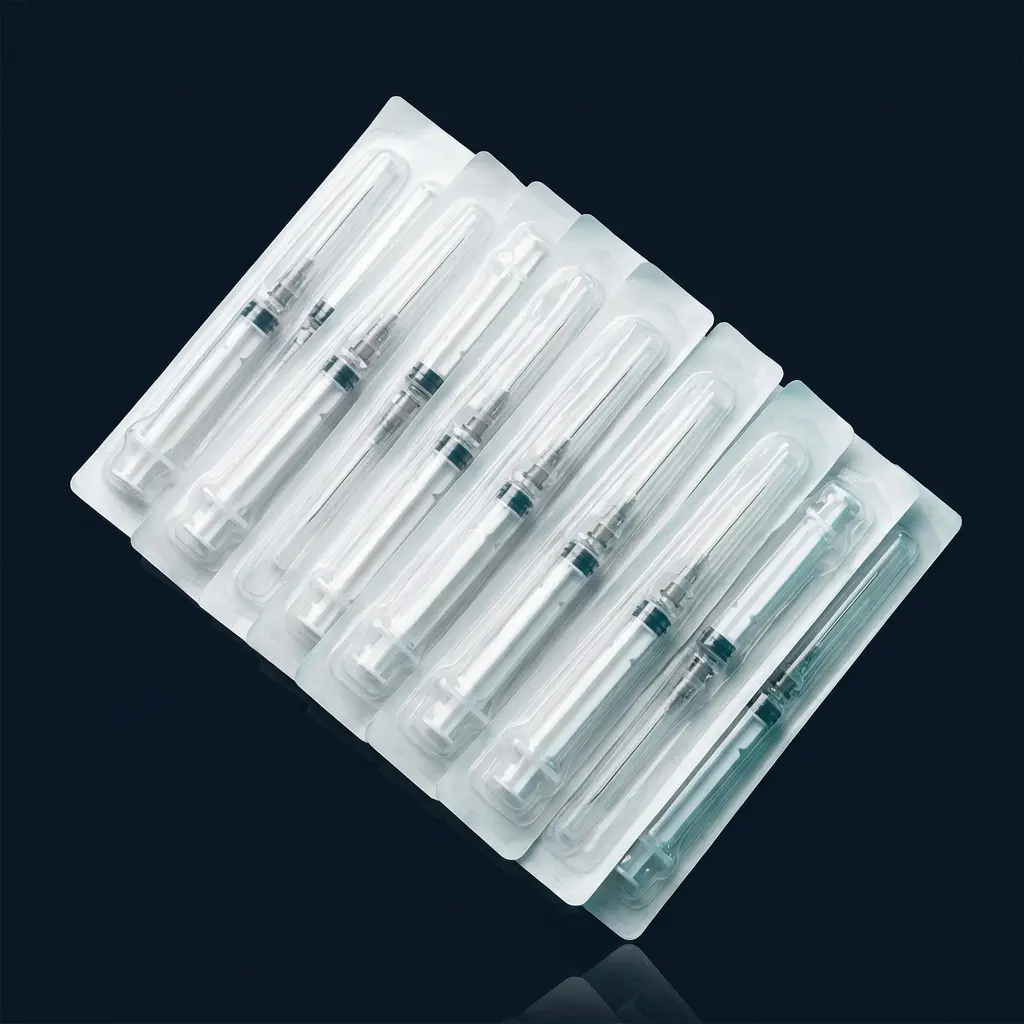
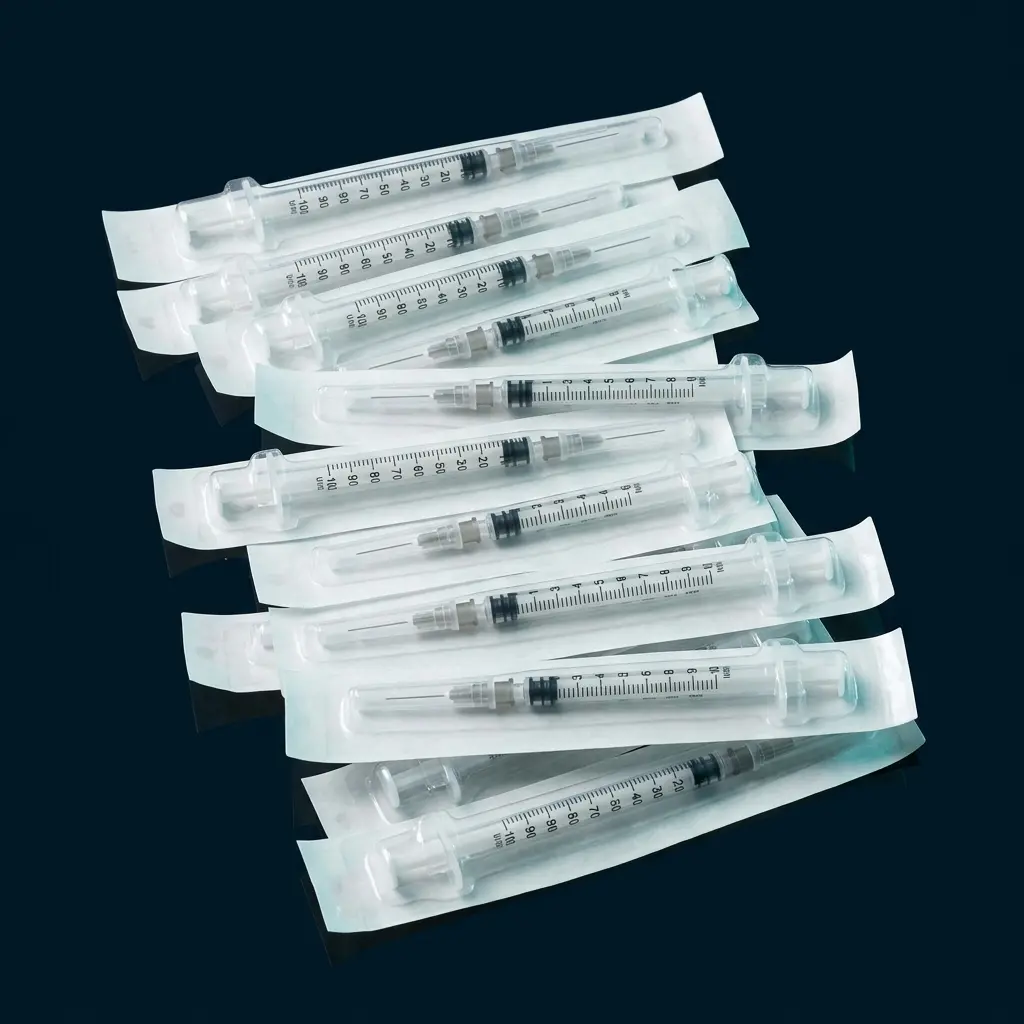
These U-100 insulin syringes (1ml, 29 gauge) are the practical standard for subcutaneous peptide administration in animal research protocols. The U-100 graduation means 1 unit = 10 mcg for a 1mg/ml solution — a graduation scale that maps intuitively onto common peptide dosing ranges. The 29 gauge needle minimizes tissue trauma at the injection site, which matters in repeated-injection protocols where site reactions can confound results or cause animal distress.
Why Insulin Syringes for Peptide Research
Standard laboratory syringes in the 1-5ml range have too coarse a graduation for the volumes involved in peptide dosing — the typical 50-500 mcg dose requires accurate delivery of 0.05-0.5ml, and a 5ml syringe has 0.2ml graduations that make this impractical. Insulin syringes solve this with 0.01ml graduations (for U-100). The short needle (1/2 inch) is appropriate for subcutaneous injection in rodents and the fixed needle design eliminates the dead-space variability of Luer-lock connections, where 0.05-0.1ml can be lost in the hub.
For intraperitoneal injection in rodents, the same syringes work with slightly different angle technique. For intravenous injection, longer needle versions (5/8 inch) are preferred for tail vein access, but the 1/2 inch models work for retroorbital or cardiac approaches. The pack of 10 is sized for protocol optimization runs where you need enough to establish technique and dosing without committing to bulk purchase.
Product Specifications
| Parameter | Value |
|---|---|
| Volume | 1ml (U-100) |
| Needle gauge | 29G |
| Needle length | 1/2″ (12.7mm) |
| Graduation | 0.01ml (1 unit) |
| Needle type | Fixed, integrated |
| Quantity | 10-pack, individually packaged |
Storage
Store at room temperature in original packaging, away from heat and direct sunlight. Each syringe is individually sterile-packaged with an expiry date. Do not use after the printed date. In rodent research, each syringe should be used for a single animal and discarded — reuse between animals introduces cross-contamination risk and dulls the needle enough to increase injection discomfort.
How do U-100 syringes map to standard concentration units?
U-100 means 100 units per ml — a notation from insulin dosing that is now widely used in peptide research. If you reconstitute 1mg (1000 mcg) of peptide in 1ml of water, your solution is 1000 mcg/ml = 100 units/ml in U-100 terms. A 100 mcg dose is 10 units on the syringe. A 50 mcg dose is 5 units. A 200 mcg dose is 20 units. This makes the math straightforward for common working concentrations. For a 2mg/ml stock (2000 mcg/ml), 200 units = 1ml = full syringe. Labeling your reconstitution calculations on the vial prevents dosing errors.
What is the technique for subcutaneous injection in mice?
Scruff the mouse with your non-dominant hand and tent the loose skin on the back of the neck or the dorsal flank. Insert the needle bevel-up at a shallow angle (15-30 degrees) into the tented skin. Before injecting, pull back the plunger slightly — if you see blood, you are in a vessel; withdraw and reposition. A small bleb of fluid should form under the skin as you inject, confirming subcutaneous placement. After withdrawal, apply gentle pressure with a clean swab for 5-10 seconds. Rotate injection sites in multi-dose protocols to prevent local irritation.
Insulin syringes are supplied for laboratory research use only. For research purposes only.

Reviews
There are no reviews yet.