VIP
You’re now subscribed to price tracking for this product. We’ll notify you if the price drops.
Fast Delivery
Quick, reliable shipping to any location.
Free & easy returns
Return this item by mail or in store within 90 days for a full refund.
About VIP
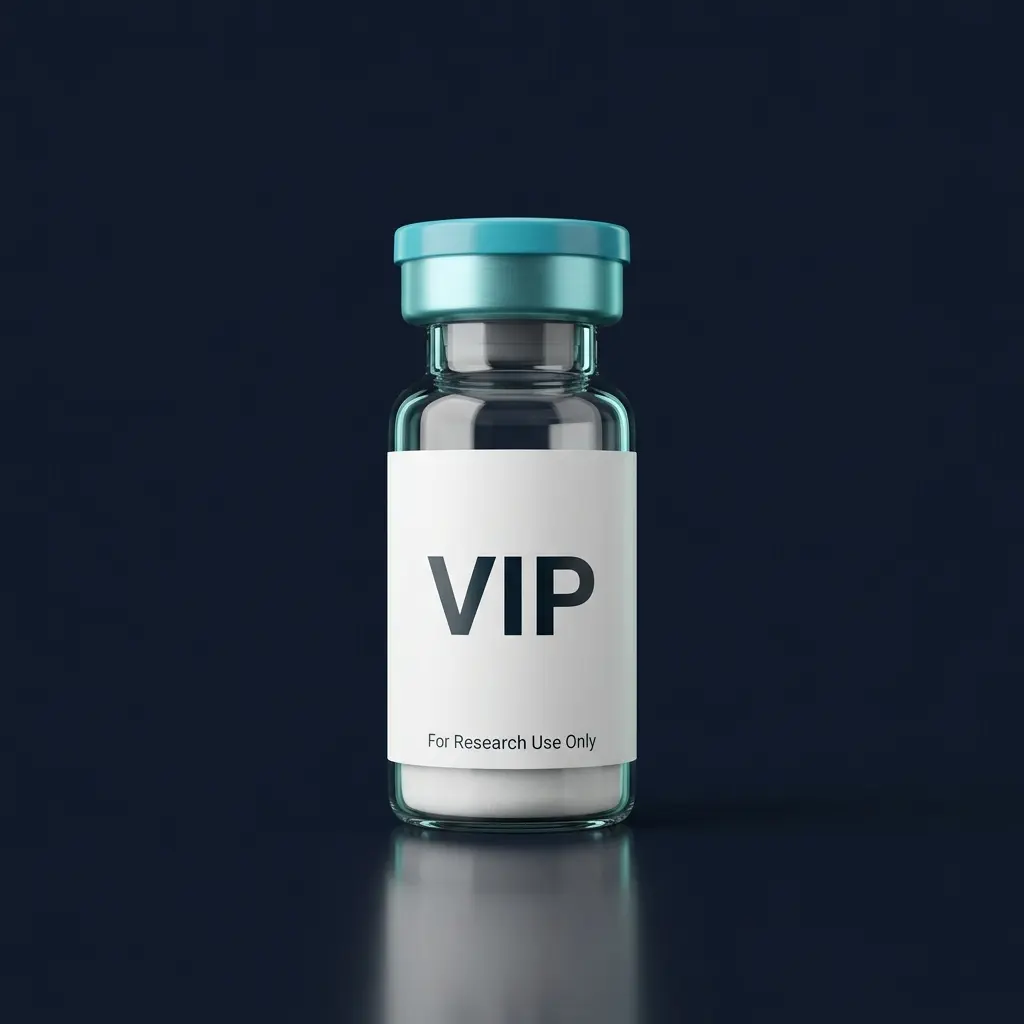
Vasoactive Intestinal Peptide (VIP) is a 28-amino acid neuropeptide originally discovered in porcine intestine in 1970. The name describes the initial pharmacological observation — it is vasoactive and found in the gut — but underrepresents the peptide’s biology. VIP is now understood as a pleiotropic neuromodulator with roles in the immune system, circadian rhythm regulation, reproductive function, and multiple neural circuits. It is found throughout the nervous system and peripheral organs.
VIP signals through two GPCRs: VPAC1 and VPAC2 (previously VIP1R and VIP2R). VPAC1 is expressed broadly including in lymphocytes, lung, intestine, and liver. VPAC2 is more restricted, with prominent expression in T-cells, the suprachiasmatic nucleus (the circadian clock), and several brain regions. In research models, VPAC receptor activation elevates cAMP and is studied for the downstream effects characteristic of VIP signaling: smooth muscle relaxation (including bronchodilation and vasodilation), neurotrophin production, anti-inflammatory cytokine shifts, and inhibition of T-cell proliferation. VIP is one of the most potent endogenous anti-inflammatory peptides studied.
Research interest in VIP has focused on: inflammatory pathways (VIP shifts immunity toward anti-inflammatory Th2/Treg phenotypes in research models), pulmonary vascular biology (bronchodilation, vasodilation), and circadian biology (VIP neurons in the suprachiasmatic nucleus are required for circadian rhythm generation and synchronization).
Specifications
| Parameter | Value |
|---|---|
| Compound | Vasoactive Intestinal Peptide (VIP), 28 amino acids |
| Purity | ≥98% (supplier batch spec; 99.4% avg across independently tested lots) |
| Format | Lyophilized powder |
| Reconstitution | Sterile water or saline |
| Storage | -20°C; 2-8°C after reconstitution, protect from light |
Storage
Store at -20°C and protect from light. Refrigerate at 2-8°C after reconstitution and use within 14 days. VIP is a relatively fragile peptide — minimize handling time and exposure to elevated temperature after reconstitution.
What are VIP’s main anti-inflammatory mechanisms?
In research models, VIP inhibits innate and adaptive immune responses through multiple mechanisms. It reduces macrophage and dendritic cell production of pro-inflammatory cytokines (TNF-alpha, IL-6, IL-12) while increasing anti-inflammatory cytokines (IL-10). In T-cells, VIP inhibits Th1 and Th17 differentiation (pro-inflammatory phenotypes) and promotes Treg and Th2 differentiation (anti-inflammatory phenotypes). It also inhibits NK cell cytotoxicity and reduces neutrophil function. These broad anti-inflammatory effects make VIP one of the most immunomodulatory peptides studied and have driven research interest in VIP and its receptor pathways in autoimmune-disease models.
How does VIP regulate circadian rhythms?
VIP is the primary neurotransmitter of the suprachiasmatic nucleus (SCN), the brain’s master circadian clock. VIP neurons in the SCN synchronize individual cellular clocks within the nucleus and are essential for maintaining coherent circadian oscillations across the network of clock cells. VPAC2 receptors on SCN neurons receive VIP signals to synchronize their molecular clock cycles. VIP also helps the SCN respond to light signals that reset the clock daily. Mice lacking VIP or VPAC2 lose circadian behavioral rhythms, demonstrating VIP’s essential role in circadian timekeeping.
What biology is being studied with VIP in research?
VIP has been investigated in research on pulmonary vascular biology (where vasodilation and anti-proliferative effects on pulmonary vasculature are relevant), intestinal inflammation, and autoimmune-related immune pathways. Inhaled VIP has been examined in pulmonary models with mixed results. The short half-life of native VIP (minutes) is a challenge for systemic study, and modified longer-acting VIP analogues are being characterized. In research contexts, the immunological and circadian biology applications are particularly active areas.
VIP is supplied for laboratory research use only. Not approved for unsanctioned human use. Handle in compliance with institutional biosafety guidelines.

Reviews
There are no reviews yet.