KPV
You’re now subscribed to price tracking for this product. We’ll notify you if the price drops.
Fast Delivery
Quick, reliable shipping to any location.
Free & easy returns
Return this item by mail or in store within 90 days for a full refund.
About KPV
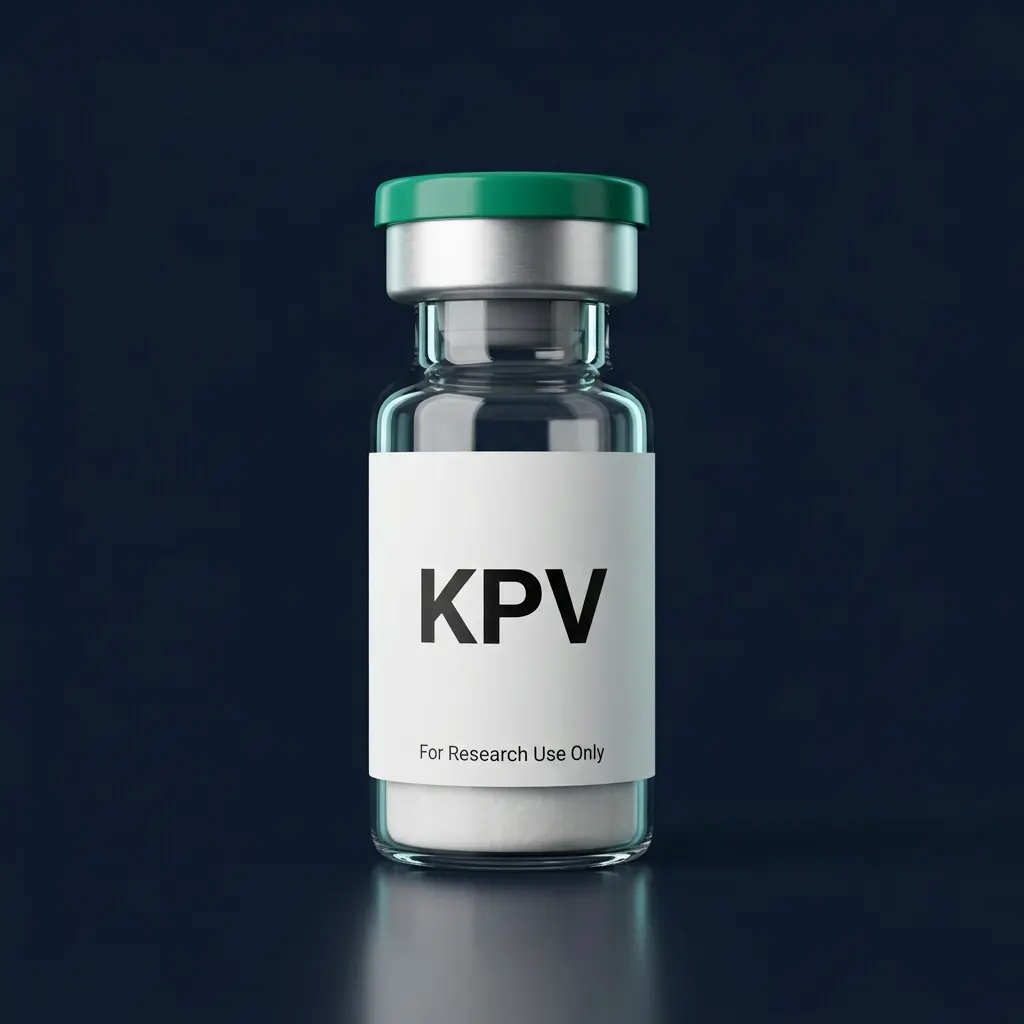
KPV (Lys-Pro-Val) is a tripeptide derived from the C-terminus of alpha-melanocyte-stimulating hormone (alpha-MSH). This three-amino acid sequence retains the core anti-inflammatory activity of the parent molecule. Alpha-MSH is a POMC-derived neuropeptide known for its roles in pigmentation, energy balance, and inflammation suppression. The C-terminal KPV sequence was identified as the minimal active unit responsible for the anti-inflammatory effects.
In research models, KPV is studied for its activity through melanocortin receptors (particularly MC1R) and its direct anti-inflammatory activity in intestinal epithelial cells — specifically suppressing NF-kB activation and downstream inflammatory cytokine production. This intestinal epithelial activity has made KPV particularly interesting for research into inflammatory bowel disease (IBD) models, where inflammation of the intestinal mucosal layer is the central pathology under study. Unlike the full alpha-MSH molecule, KPV is a small, stable tripeptide that can potentially survive GI transit and act locally on intestinal mucosa — a useful delivery route to study for GI inflammatory pathways.
KPV is also found in the Klow Blend product, where it is combined with BPC-157, GHK-Cu, and TB-500. As a standalone product, KPV is suited for studies where the anti-inflammatory mechanism specifically is being investigated without the additional tissue repair signals of the combined blend.
Specifications
| Parameter | Value |
|---|---|
| Compound | KPV (Lys-Pro-Val, alpha-MSH C-terminal tripeptide) |
| Purity | ≥98% (supplier batch spec; 99.4% avg across independently tested lots) |
| Format | Lyophilized powder |
| Reconstitution | Sterile water or saline |
| Storage | -20°C; 2-8°C after reconstitution |
Storage
Store at -20°C before reconstitution. Refrigerate at 2-8°C after reconstitution and use within 28 days. KPV is a small, stable tripeptide with good shelf life under proper storage conditions.
How does KPV suppress inflammation?
In research models, KPV acts through melanocortin receptor 1 (MC1R) and through direct intracellular mechanisms in epithelial cells. It suppresses NF-kB nuclear translocation — a critical step in the inflammatory signaling cascade — and downstream production of pro-inflammatory cytokines including IL-6, IL-8, and TNF-alpha. In intestinal epithelial cell studies, KPV has been shown to reduce inflammatory cytokine production induced by bacterial components (LPS) and by cytokines like IL-1beta. The MC1R-mediated component adds an additional layer of anti-inflammatory signaling through cAMP pathway activation.
Why is KPV specifically studied for IBD rather than other inflammatory conditions?
KPV’s intestinal epithelial cell activity and potential oral stability make it particularly suited for GI inflammatory research. IBD models (Crohn’s disease, ulcerative colitis) involve inflammatory activation of intestinal mucosal cells, and local delivery of anti-inflammatory signals to these cells is a research goal. KPV’s small size (tripeptide) gives it better potential for surviving GI transit than larger peptides, though stability is still formulation-dependent. Nanoparticle formulations for oral KPV delivery to the intestinal mucosa have been developed and studied in colitis models specifically for this reason.
How does KPV compare to full alpha-MSH for anti-inflammatory research?
Full alpha-MSH (13 amino acids) activates all five melanocortin receptors (MC1R-MC5R) including MC4R, which mediates GLP-1 receptor signalling and sexual effects in the hypothalamus. KPV retains the anti-inflammatory C-terminal activity with more selective receptor engagement and much smaller molecular size. For research specifically on the anti-inflammatory arm of alpha-MSH activity without confounding appetite/endocrine effects, KPV is a more tractable tool. The small size also makes it more amenable to oral delivery research for GI applications.
KPV is supplied for laboratory research use only. Not approved for human use. Handle in compliance with institutional biosafety guidelines.

Reviews
There are no reviews yet.