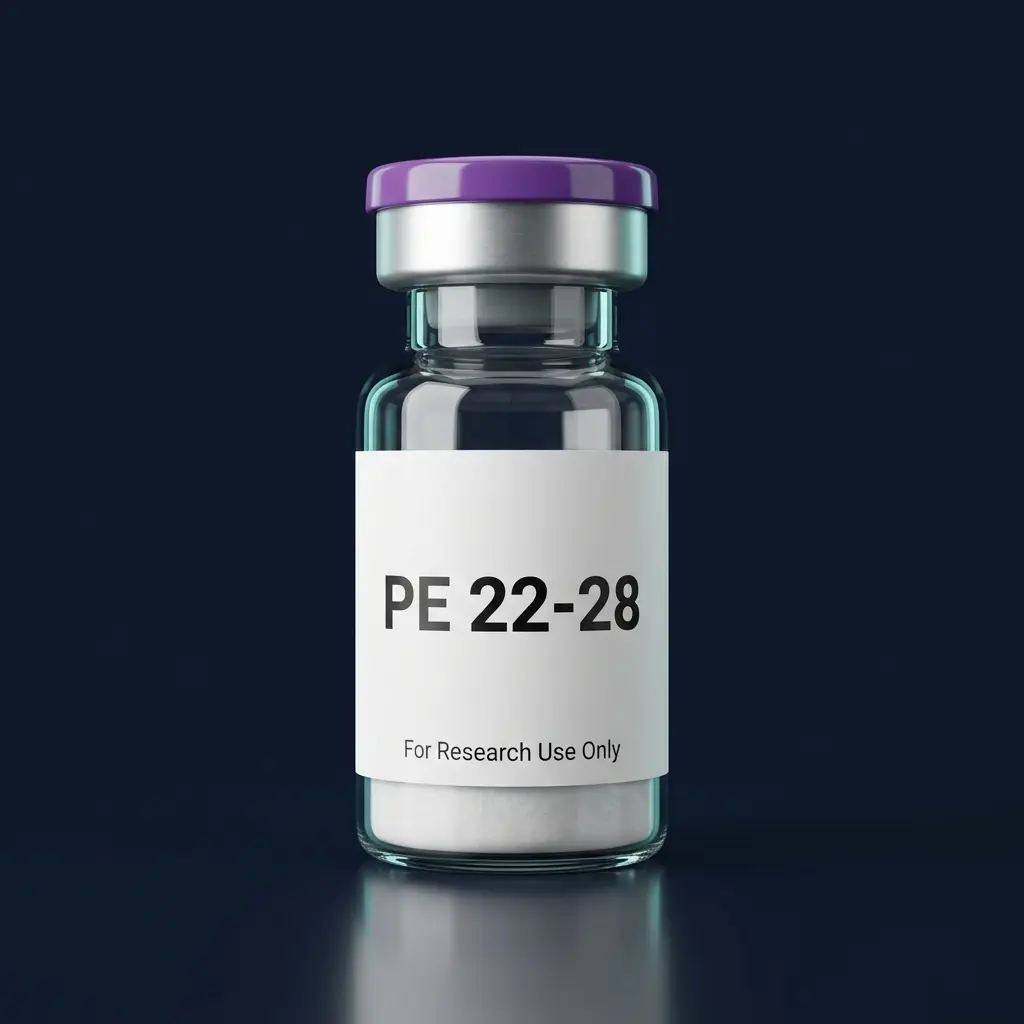
PE 22-28 10mg
You’re now subscribed to price tracking for this product. We’ll notify you if the price drops.
Fast Delivery
Quick, reliable shipping to any location.
Free & easy returns
Return this item by mail or in store within 90 days for a full refund.
About PE 22-28 10mg
PE-22-28 is a synthetic peptide fragment derived from the spadin protein, which is itself derived from the propeptide of the neurotensin receptor type 3 (NTSR3/sortilin). Spadin was originally identified as an endogenous blocker of TREK-1 (TWIK-related K+ channel 1), a two-pore-domain potassium channel expressed throughout the CNS that has been identified as a potential target for antidepressant pharmacology. PE-22-28 is an optimized synthetic peptide that retains TREK-1 antagonism in a shorter, more stable sequence.
The TREK-1 connection to depression comes from the observation that TREK-1 knockout mice display a depression-resistant phenotype, and that conventional antidepressants (SSRIs, tricyclics) partially inhibit TREK-1. The hypothesis is that TREK-1 inhibition contributes to antidepressant efficacy. Spadin and PE-22-28, as endogenous and synthetic TREK-1 blockers respectively, allow investigation of this hypothesis without the polypharmacology of conventional antidepressants.
Published research on PE-22-28 in rodent models shows antidepressant-like effects in forced swim and tail suspension tests, as well as in chronic mild stress models of depression. These effects have been observed at doses that appear to have good CNS penetration. The peptide represents a relatively selective pharmacological tool for studying TREK-1’s role in mood regulation compared to genetic approaches.
Specifications
| Parameter | Value |
|---|---|
| Compound | PE-22-28 (Spadin-derived TREK-1 antagonist) |
| Amount per Vial | 10mg |
| Purity | ≥98% (supplier batch spec; 99.4% avg across independently tested lots) |
| Format | Lyophilized powder |
| Reconstitution | Sterile water or saline |
| Storage | -20°C; 2-8°C after reconstitution |
Storage
Store at -20°C before reconstitution. Refrigerate at 2-8°C after reconstitution and use within 28 days. Stable for 24+ months as lyophilized powder.
What is TREK-1 and why is it relevant to antidepressant research?
TREK-1 (TWIK-related K+ channel 1, KCNK2) is a two-pore-domain “background” potassium channel that sets the resting membrane potential in neurons and is modulated by temperature, mechanical stretch, lipids, and various neurotransmitter signaling. TREK-1 knockout mice show reduced depression-like behavior and resistance to stress-induced anhedonia. Conventional antidepressants including SSRIs and tricyclics partially inhibit TREK-1 in addition to their primary targets. This led to the hypothesis that TREK-1 inhibition contributes to antidepressant efficacy, and spadin/PE-22-28 allow testing this hypothesis with more selective TREK-1 antagonists.
What is the evidence for PE-22-28 having antidepressant effects?
Published rodent studies by Mazella’s group and others have shown PE-22-28 produces antidepressant-like effects in standard behavioral tests (forced swim test, tail suspension test) and in chronic mild stress models. The effects were observed at IP or IV doses and appeared to involve TREK-1-related mechanisms. The compound also showed effects on hippocampal neurogenesis in some studies. All evidence is preclinical — no clinical trials in humans have been conducted. The data supports PE-22-28 as a useful tool for TREK-1 research in mood biology contexts.
How does PE-22-28 compare to conventional antidepressants for research purposes?
Conventional antidepressants (SSRIs, SNRIs, tricyclics) affect multiple targets — monoamine transporters, various receptors, and ion channels including TREK-1. This polypharmacology makes it difficult to attribute specific effects to TREK-1 modulation. PE-22-28’s relative selectivity for TREK-1 makes it more useful for determining which antidepressant-related effects are specifically TREK-1-mediated versus those requiring monoaminergic mechanisms. This specificity is valuable for mechanistic research even if PE-22-28 is not being developed as a clinical antidepressant itself.
PE-22-28 is supplied for laboratory research use only. Not approved for human use. Handle in compliance with institutional biosafety guidelines.

Reviews
There are no reviews yet.